14 KiB
narrator, subject, facilitator, date, approved, summary, location, headshot, topics, links
| narrator | subject | facilitator | date | approved | summary | location | headshot | topics | links | |||||||
|---|---|---|---|---|---|---|---|---|---|---|---|---|---|---|---|---|
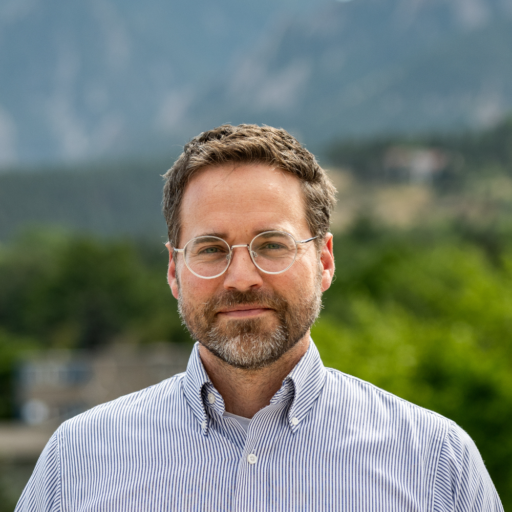
| Hermilo Brito | Language learning | Nathan Schneider | 2026-04-08 | 2026-05-11 | How a language school became a center for philosophy and social critique. | Cuernavaca, Mexico | hermillo_brito.jpg |
|
|
How do you introduce yourself as a language teacher?
I was part of the first group working with Ivan Illich at the Centro Intercultural de Documentación in Cuernavaca. In 1960, I had the good fortune to work with him, and by 1967 I had become general director of CIDOC---he put me in charge of administration because I had the capacity for it. We had many participants in the two parts of CIDOC: the Spanish school and the courses. People came from all over the world, primarily from North America and Europe, with some from the East but in smaller numbers. North Americans were the majority; Europeans came in smaller numbers, with the French more numerous than the English, for example. From 1968 I ran the Spanish department, then was named general director. I participated in both parts.
The two parts were not separate---they were together. Participants in the Spanish school also attended the different courses, conferences, and seminars in CIDOC's other section---the one devoted to discussions of various topics. The method was to investigate a topic thoroughly and launch ideas through working drafts, which Ivan would send to friends, acquaintances, and interested parties. He would invite them to Cuernavaca on a fixed date to gather and discuss---for example, education, the church, and the organization of society.
He needed income to carry out his research. He discovered he could teach language to people who wanted to work in Latin America and needed Spanish. This was his most important source of income---it funded his research. This was not because he saw it as a way to make money, but to have the funds for the work that truly interested him. He had the means to live and move forward, and that made everything else possible.
He criticized the hierarchy of the church a great deal. He wrote about this---you know, it was a controversial topic---speaking critically of the ecclesiastical hierarchy. Not of the church or Catholicism in general, but of the ecclesiastical hierarchy specifically. Later his interest turned to education. He sent manuscripts to friends and invited them to Cuernavaca. Not only friends and acquaintances came, but specialists as well---Harvard professors, Jonathan Kozol and John Holt, many such figures---to participate in discussions at CIDOC with Ivan and his collaborators. These were the discussions that would become books like Deschooling Society and Tools for Conviviality. I was there for fourteen years.
What prepared you for that work? What were you doing before, and how did you get involved in CIDOC?
Learning the methodology of education---specifically, how to teach Spanish to foreigners. I had experience in Puerto Rico teaching young people who were studying at a New York university. A professor prepared us for several months using a methodology from the US State Department that had been applied in the army and was considered very effective at that time. It was designed to teach people who would travel to different countries in Europe during the postwar period. That was the first preparation. I also studied phonetics, linguistics, the history of Mexico, and methodology at the university. But the real preparation was at CIDOC---not because it was a school or university, but because of the discussions.
Did you teach language differently at CIDOC than elsewhere?
Yes. The basis was imitation and repetition of complete phrases. Students had to learn and memorize dialogues. Ivan would give a demonstration once, and the students would repeat. The first criterion was: which phrases were complete? For me, he did the same in French. It was pure memorization.
We always used native teachers. The student, by listening carefully to how we pronounced, how we spoke, how we made the intonation, would then imitate what the professor was teaching and the way he pronounced it.
He knew fourteen languages at the level of a mother tongue---French, English, German, Yugoslav, Italian, very classical Italian. In half an hour, one hour at most, he could speak like a native. Very few people in the world are capable of that.
We had some resources like a language laboratory for students interested in learning more for an hour or two. There were recordings of Spanish. You could listen to the lessons of the day with your teacher. Or you could listen to stories. You could listen to narrations. You could listen to different things on tape machines.
Since Illich was a Catholic priest, was there a spirituality at CIDOC?
He renounced his public role as a priest in the Catholic Church. But he continued to hold masses for himself or a few friends. There were many priests. The language students were primarily religious personnel---priests, nuns, and laypersons---generally Catholic. Anglican, Methodist, and other religions were a minority. This was especially true in the first five years, from 1961 to 1966. In 1966 we left the first house, Chula Vista. Casa Blanca---a former hospital converted into offices and a school---then opened to the whole world, and so did the center itself.
Most of them came to learn Spanish to work with Latin Americans in their countries. The Catholic Church needed priests who could serve communities in Los Angeles, in California, in Colorado.
The social dimension of the school at Chula Vista was about sensitizing people---to understand that Latin America did not need foreigners to work there, because foreigners typically brought the American way of life. Illich didn't want that for Latin America. He tried to convince them not to go, to spare the peoples of Latin America from that bad experience. If he couldn't convince them, he at least wanted to give them the sensitivity to learn from those peoples.
If an American came saying, "I want to work in Latin America," Ivan would say: "It's better to go back to the United States. You have nothing to contribute to Latin America. What you want to impose is a culture that is not Latin American. It is an external culture."
Latin American peoples have more to teach than to learn from foreigners. They have a culture thousands of years old before the Europeans arrived. Mexico had highly developed cultures---a mother culture capable of cultivating from its beginning. Corn was transformed from nothing. They had the milpa, planting not only corn but beans and squash---a perfect nutritional complement, a complete food. This was created by the pre-Hispanic cultures of central Mexico, Oaxaca, Puebla, and Michoacán---the different cultures of Mesoamerica.
They studied the movements of the stars in relation to agriculture and developed careful observations of space. The Maya could measure time better than Europe of that era, with minimal errors. There were very important scientific developments, and then the Europeans came and destroyed much of it. But much is still conserved. Visit the National Museum of Anthropology and you see how the Mexica, the last great culture, built on all previous ones, advancing in every field: the milpa, astronomy, the observation of the stars. The only thing they didn't have was the wheel, but they lived very well without it---in coexistence with nature, not destroying it.
How did you see Illich learn and change from living in Mexico specifically?
He didn't talk about it directly, but he brought specialists in Mexico to speak to people on those subjects. He was interested in developing his own ideas---on education, transportation, industrialization, ecology. He gathered information here, analyzed it, and launched his ideas. That's why his books are so important: he could gather all the information and put forward his own conclusions. He identified the deficiencies of industrialization, of education---how the school conditions people to be consumers, to buy, buy, buy.
For an American family, the best life is a big house, a car, university degrees. But that is only possible for privileged people who can afford it. In Mexico, in Latin America, only a small fraction of the population can pay for education. The rest aren't unwilling---they simply cannot afford it. He criticized this sharply and proposed ideas, many of which are being carried out. In Chicago there were Learning Exchange Centers. In Chiapas, groups are working on these ideas. We all have the capacity to teach---a carpenter or a plumber can teach others their trade. These were Ivan's ideas, and there were many more besides those.
One interesting thing about CIDOC: to participate in the conferences, there was a registration system. Anyone with a topic to share could offer a course, and there was a catalog where courses were announced---covering theology, sociology, and other fields, spanning a semester, two semesters, or up to six semesters. The teacher offered the course, explained it, and participants could take courses with whichever professor they chose upon paying an enrollment fee.
Paulo Freire came to CIDOC, at Casa Blanca. I had the opportunity to hear him many times. People were captivated, by his ideas and by his way of seeing life. I could see the beautiful side of that man, the wonderful side---his philosophy of life, his way of seeing the human being in front of him, was something fantastic. Even public school teachers came to hear him.
Did Freire and Illich spend a lot of time together? Were they friends?
Not necessarily close. Sometimes with Paolo, they didn't see eye to eye. There was intellectual confrontation. But even when he was very polemical, you could see Illich as a normal person.
He worked like crazy, with tremendous energy---but he also knew how to rest. I had the fortune to go with a group to Acapulco with him. He loved the sea and could spend hours sunbathing, floating on his back. He was an athlete---he swam with incredible physical endurance.
He was also very good with numbers and finances, by natural gift---he could foresee everything. When we worked on budgets each year, he was precise to the letter with each item. He was a very precise person.
How did the school relate to Cuernavaca and the surrounding community?
The influx of people from all over the world made Cuernavaca cosmopolitan. People from the United States, Canada, Europe, and everywhere lived alongside Cuernavaca residents. When we were at Chula Vista, participants lived in the house, a former hotel. When we moved to Casa Blanca, the arrangement was more integrated---the students lived in the neighborhood, with families, among the people of Cuernavaca. There were many exchanges of all kinds, including romantic ones---couples, Mexicans with people from different parts of the world. My son lives in Switzerland because he married a Swiss woman. Thousands of people like him married people from other parts of the world.
CIDOC paid very good salaries, because Ivan had a strong commitment to social justice. He told us, "I want your pay to be above the average." The jobs were very appreciated---we were fortunate. He also held that the worker should earn enough to live and to be able to save. One idea of his was that someone who wants to build their own house should do so with their own savings, without asking banks for anything.
What traces are there now in Cuernavaca? What is left?
CIDOC ended its activities in 1975. Ivan ended it as his project---he didn't believe CIDOC should continue under other people with other ideas, so he simply ended it. But many of us who worked with him continued doing what we knew: teaching Spanish and cultural exchange.
Ivan's ideas also influenced us personally. Ivan wasn't the kind of teacher who said, "You have to do this" or "You have to do that." He recommended nothing---he put forward ideas, and it was your responsibility to listen. Even now, when I meet with former CIDOC workers and we talk, everyone has a very positive view of that time. They earned well and it influenced their lives greatly. Mine especially---I learned many things that no one told me I had to learn, but that I saw I was going to need. He was a very humble person. He lived very modestly, with the basics. If he had wanted, he could have had everything. But he had the virtue of austerity.
He also wrote against medicine, and doctors gave him six months to live---but he lived twenty more years with alternative medicine. Very consistent with his ideas: he believed allopathic medicine produces more illness than it cures.
This was his way of life, and it influenced us. We don't have more than we want---we don't have the vice of money, and we don't want it.
The influence of Ivan is incredibly personal. It started with those of us who were close to him, but he knew many people around the world. In Germany and across Europe, there are many groups that study and discuss his ideas. In Cuernavaca, groups are celebrating the one-hundredth anniversary of his birth---meeting to read his books, discuss his ideas, and continuing the conversation. They will surely continue for a long time. There are young adults, new people, interested in these ideas and discussing them with friends.
Personally, I don't know his current followers---the people who follow his ideas and are quite young. The people who knew him are dying.
How does your school now teach differently than CIDOC?
It's for language and culture---it has nothing to do with his ideas. It's different. Occasionally people come who are interested in knowing something about him, and we talk.
One of the things we practice here is qigong---a Chinese discipline, similar to tai chi, for preserving the internal health of the body. I have been practicing for many years. It allows me to stay in good health---I am eighty-six years old. We also offer salsa and bachata at different levels, for Mexicans as well as foreigners.
We don't just teach Spanish---language and culture are the same thing. If you don't learn Mexican culture, you don't understand the people of Mexico. It's important to know the history, a bit of the geography, the way Mexicans think, the culture, the festivals, the food. They are inseparable.